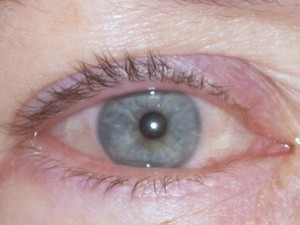
Dry eyes are one of the most common non-surgical problems seen by Ophthalmologists and Optometrists and are the cause of numerous visits to these specialists.
What are “dry eyes”?
Dry eyes are eyes which do not have enough normal tear film covering them to keep the outer tissues of the eye healthy. The most important part of the eye in dry eyes is the cornea. The cornea is the clear, curved part of the eye which covers the colored part of the eye (the iris) and the pupil. It is necessary for the sensitive cells of the cornea to be in a moist environment to stay healthy and this is the function of the tears. The tears are a complex mixture of salt, water, proteins and specialized oil gland secretions and are produced by multiple different glands, including the lacrimal glands, the Meibomian glands, and the goblet cells. The main lacrimal gland is tucked invisibly up under the upper lid, but the others are inside the lids and surrounding eye tissue. If the tears are inadequate in amount or composition, or the patient has outside influences which are drying the eyes, several symptoms may occur.
What are the symptoms of dry eyes?
Paradoxically, patients with dry eyes often present at their eye doctor’s with excessive tearing. This occurs if some of the glands are not producing their proper amount of secretions and the remaining tear glands try to compensate by producing more fluid, but this fluid does not have the correct components to work like normal tears. Other possible symptoms of dry eyes may be a dry feeling, scratchiness, irritation or bloodshot eyes.
Why do eyes become dry?
There are multiple causes of dry eyes. Inflammation of the tear-producing glands is common as patients age and there are some internal diseases, such as Sicca Syndrome (which can be associated with Sjogren’s syndrome), which are particularly likely to involve the lacrimal glands and cause decreased tear production. Decreased secretion of tears can also be caused by medications in the retinoid family, such as isotretinoin for severe acne, and acitretin for psoriasis. Exposure to wind and dry weather will have an effect on how moist and healthy the outer layers of the eye are. Sun exposure can also cause problems with the exposed areas of the eye. The sun emits ultraviolet radiation, which is divided into Type A (UVA) and Type B (UVB) and causes damage to the chromosomes in the cells of the “white” of the eyes and can eventually cause the development of benign or malignant tumors, but early on the eyes will be bloodshot, sore, and feel like there is sand or grit in the eyes.
An important, and more recent, cause of dry eyes is working or playing at a computer for long hours. Studies have clearly shown that people who work at computers or play computer games do not blink as much as those reading books or other activities and keeping the lids open longer allows the cornea to dry out. It is not uncommon for these people to decide that the computer is emitting radiation and damaging their eyes, but they are, in fact, simply drying their eyes out.
How do I treat dry eyes?
The first part of treatment should involve eliminating behaviors which worsen the problem, namely, limit computer or video game time as much as possible. Taking breaks every hour away from the screen and blinking the eyes more may be enough to take care of mild cases.
It is very important to wear sunglasses that prevent ultraviolet radiation from reaching the eye. Many sunglasses now have special coatings that provide this protection, and they will have a sticker or tag on them that says that the protection is there, so it is not necessary to buy expensive sunglasses to get this benefit. The UV protection is permanent and does not wash off. Try to find sunglasses that have 99-100% UV protection.
Dry, windy weather can be combated with sunglasses to keep grit from blowing into the eye and by the use of artificial tears, which can be found pharmacies and department stores in the area where contact lens solutions and other eye care products are found. Artificial tears can be used as often as needed for comfort and can be purchased in individual doses so that they do not get contaminated with bacteria, as can happen with multi-use bottles. If you do use a multi-use bottle, make sure you don’t touch the bottle to your eyes or lids when you use them, which is the most common way to contaminate the tears.
When these is not enough, the first treatment to try is artificial tears. These products contain saline and other ingredients to help the solution behave as closely as possible like real tears. They must be used multiple times a day as the excess is quickly drained from the eye. Alternative products include gel forms of artificial tears, which are thicker and may last longer, but will cause blurring for several minutes until they are spread over the eyes by the lids.
For patients with decreased tear production, they may find that when they awaken in the morning their eyelids feel like they are stuck to their eye. Usually, when they open the eye they will notice significant scratchiness and a feeling of irritation which lasts all day, but is usually not associated with the eyes being bloodshot. In these cases, the eye is getting drier and drier over the course of the night and the lid truly is sticking to the cells of the cornea. Only a few cells are pulled off when the lid opens, but it is enough to cause discomfort and using artificial tears only during the day will not prevent this problem. The solution is to use a heavier, petrolatum based eye ointment at bedtime, such as Lacrilube. These products look like petrolatum and are applied by pulling down the lower lid slightly and squeezing a thin line of ointment in the pocket formed by the lower lid. This is then spread over the eye by the lids and will cause significant blurring of vision and so should not be used when patients must be able to immediately read or drive.
When eyes become dry enough that these measures are not sufficient, ophthalmologists can put plugs in the ducts which drain the tears from the eyes, but these are not permanent. There is now a prescription medication called cyclosporine ophthalmic solution (brand name: Restasis) which treats the inflammation of the lacrimal gland which causes the decrease in tear production. This product is used twice a day in each eye and gradually treats the inflammation. It will take a minimum of two months to be able to tell if there is improvement, and maximum improvement may not occur for up to six months. In addition, the drops tend sting when put in the eye. The most common cause of failure with this medication is the patient not using them consistently and for a long enough period of time.
For more information see: the American Optometric Association website and for more information about Restasis, see the Allergan website.
 Derma Logic